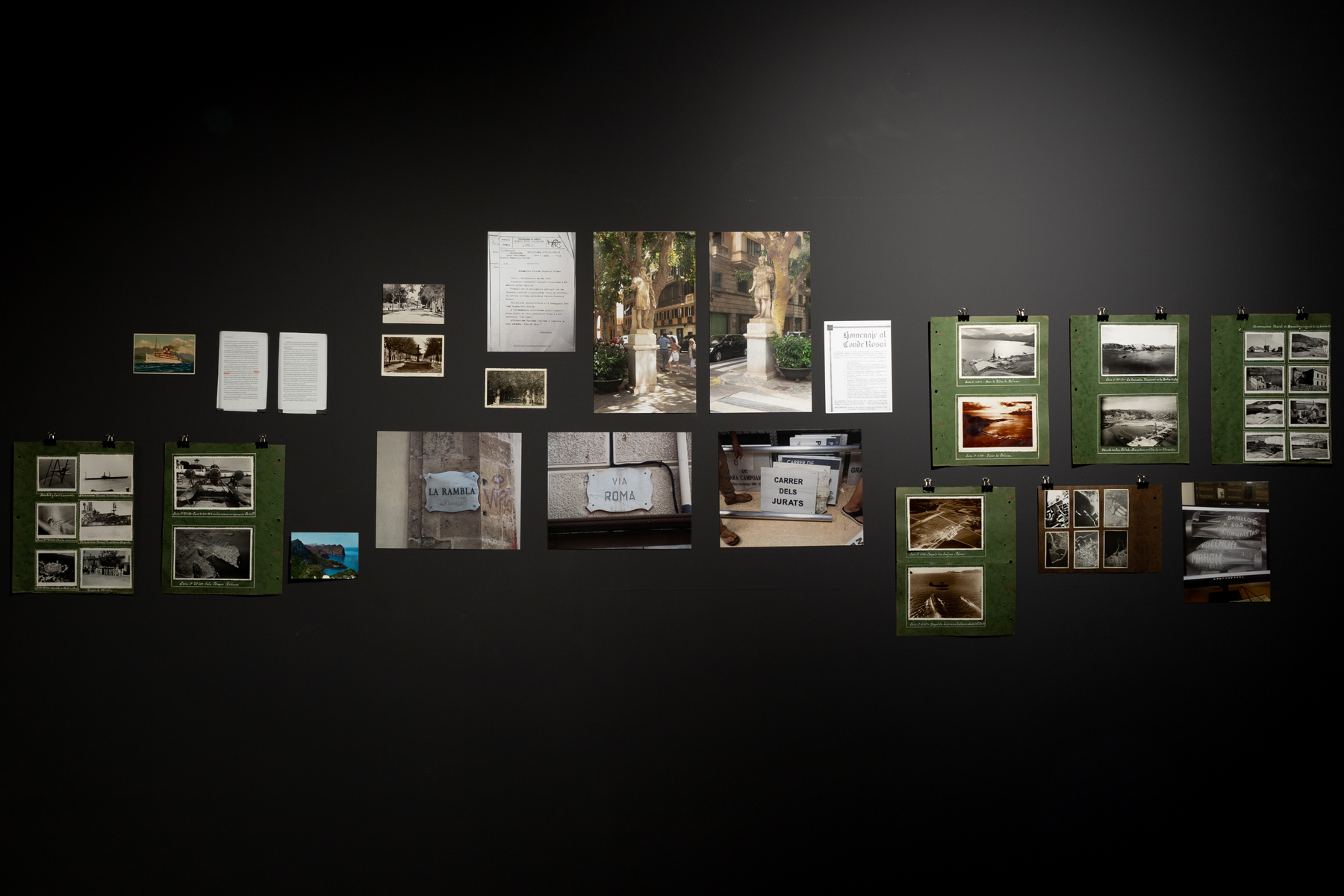
 Photo: Juan David Cortés
Via Roma
2023, A project comprising several works
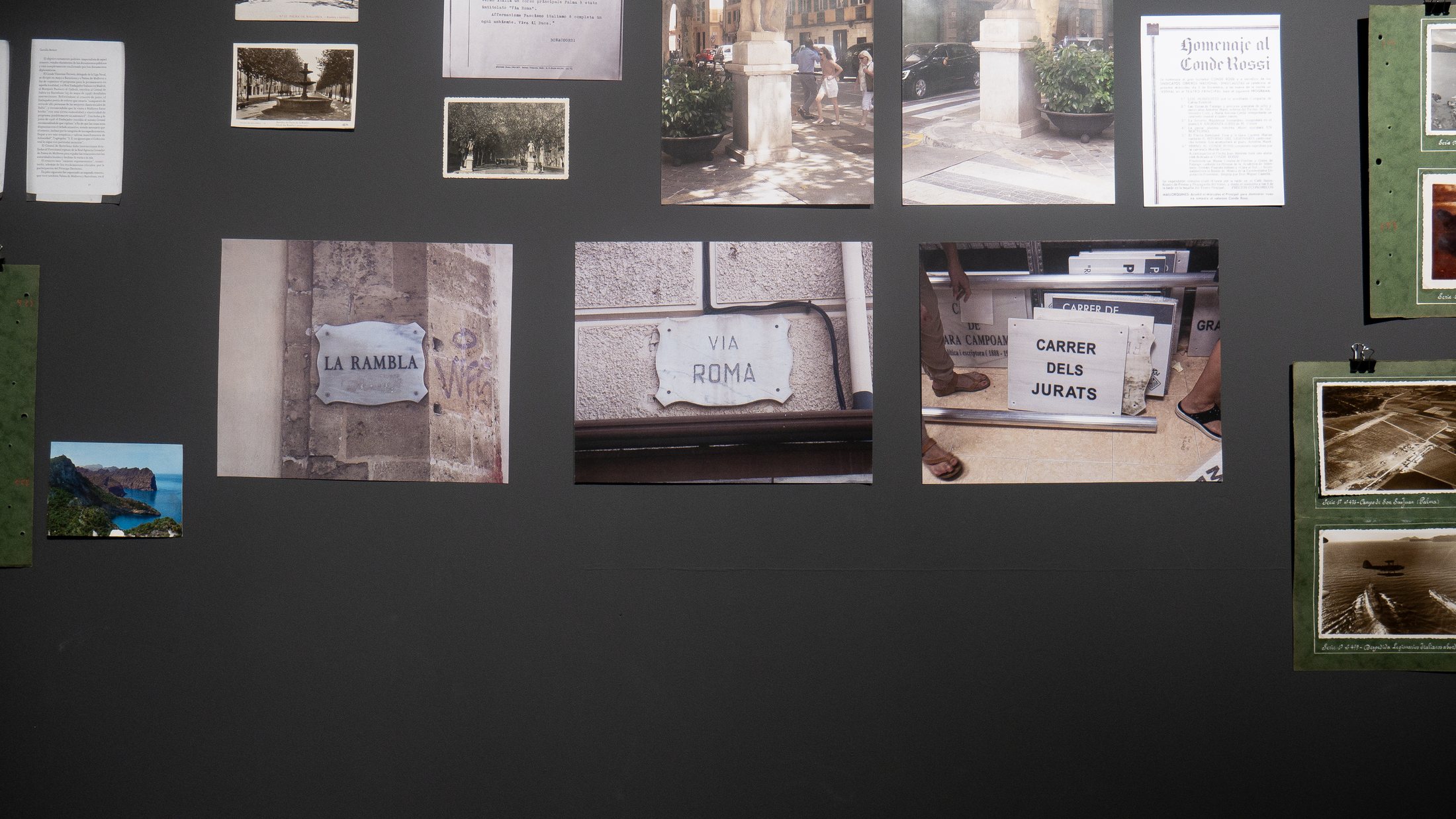
From the 1920s until the Spanish Civil War, Fascist Italy pursued a project of ideological and cultural colonisation of the Balearic Islands, with the ambition of exercising imperial control over the Mediterranean. Italian military support, based at the Pollença airfield, was crucial to the Francoist Levante offensive, during which Barcelona and Valencia were bombed. Palma’s Via Roma was given its name in gratitude. The imperialist project ended with Mussolini’s fall, but processes of colonisation continued through the development of tourism. Starting from this historical moment, our artistic research explores the links between the logics of imperialist colonisation and the establishment of the tourist model.
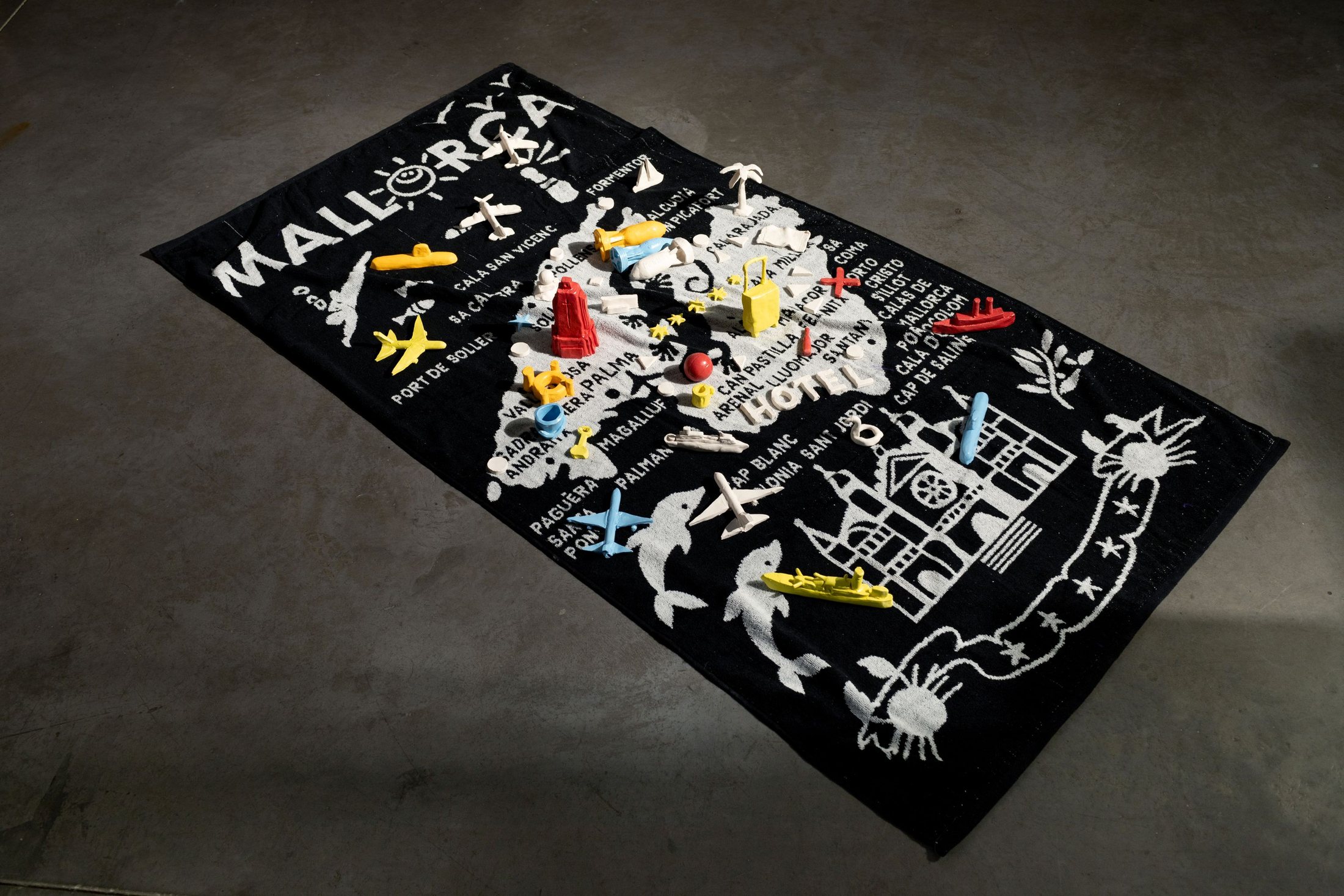
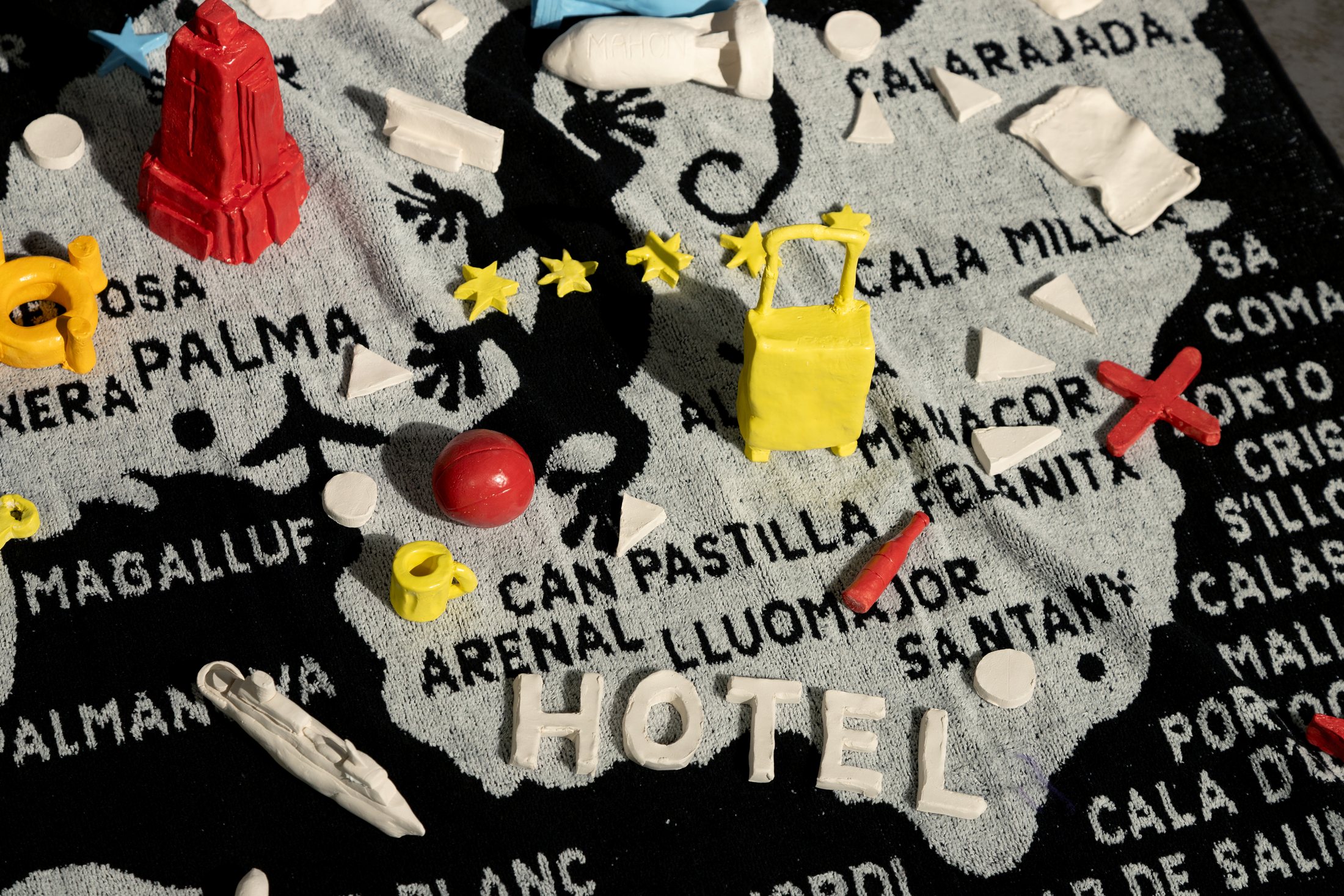
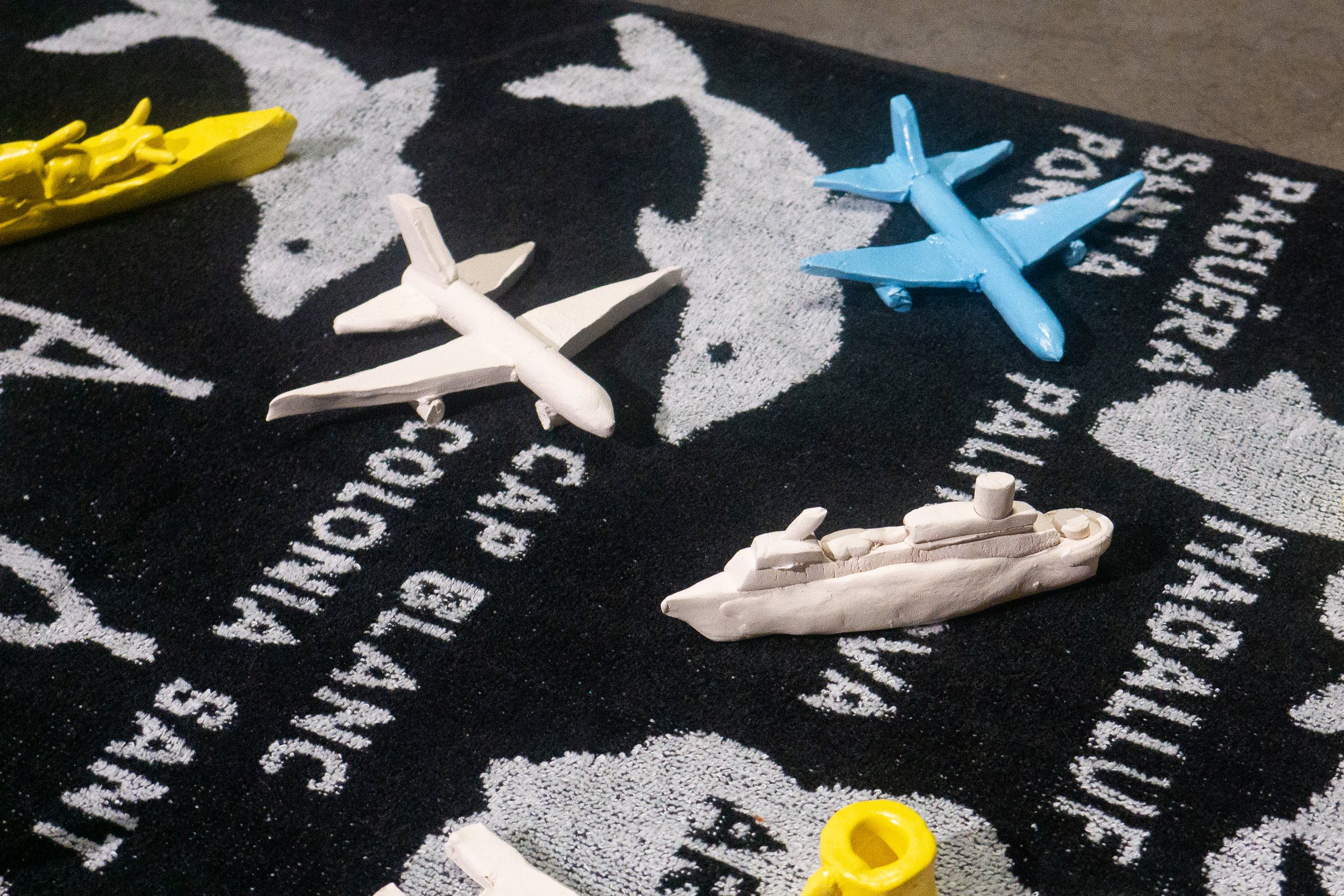
Historia reciente del placer y la geopolítica (Recent history of geopolitics and pleasure)
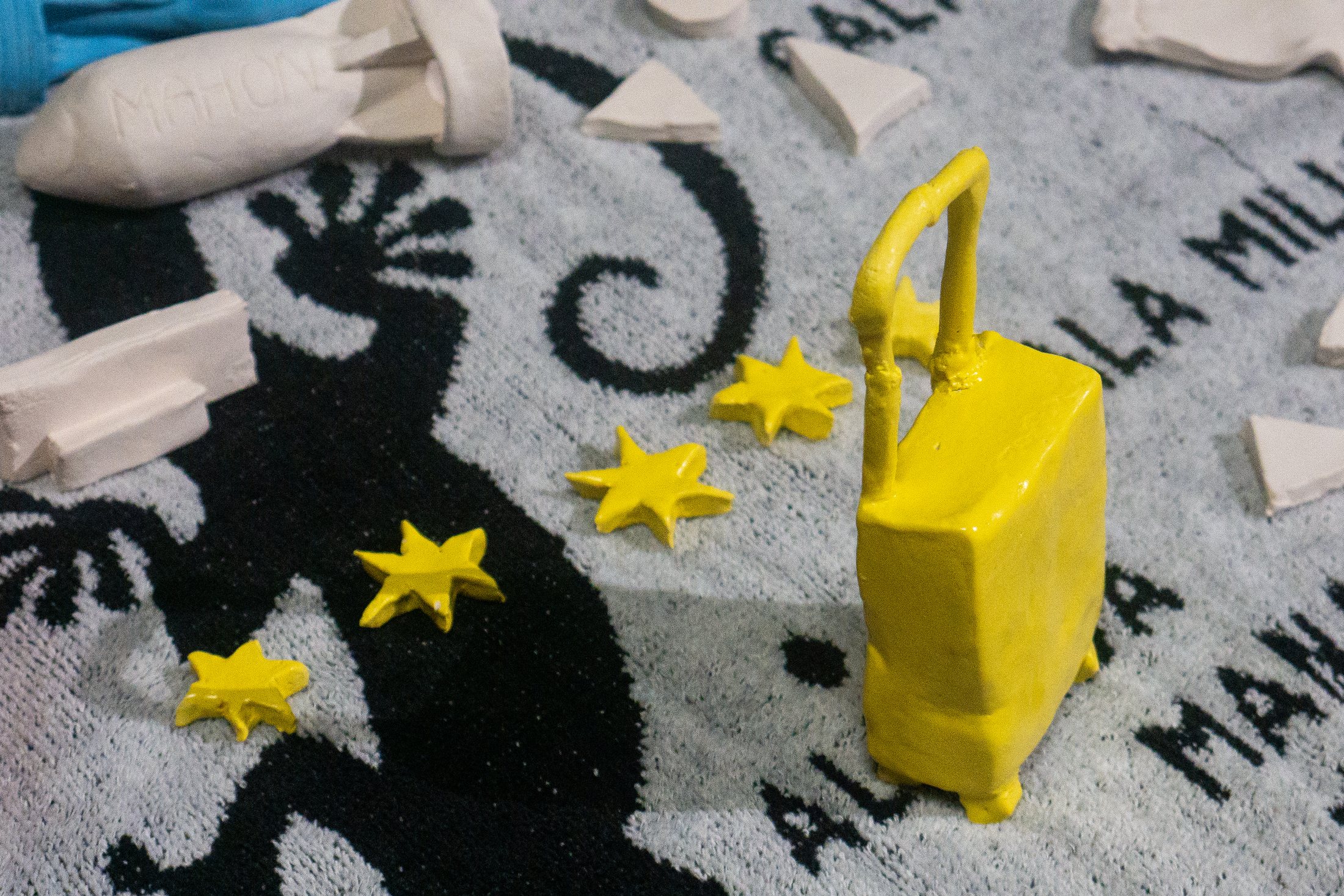
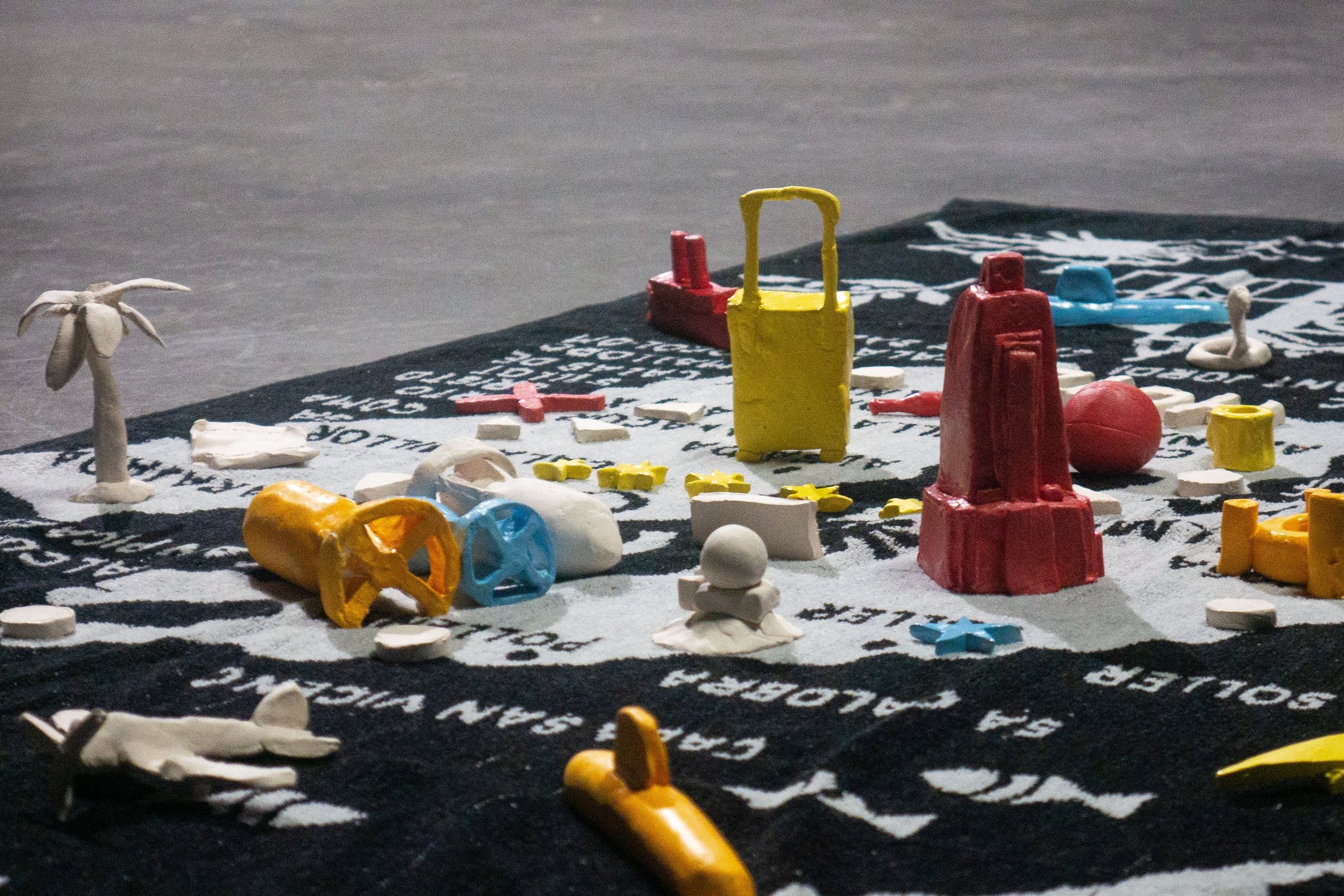
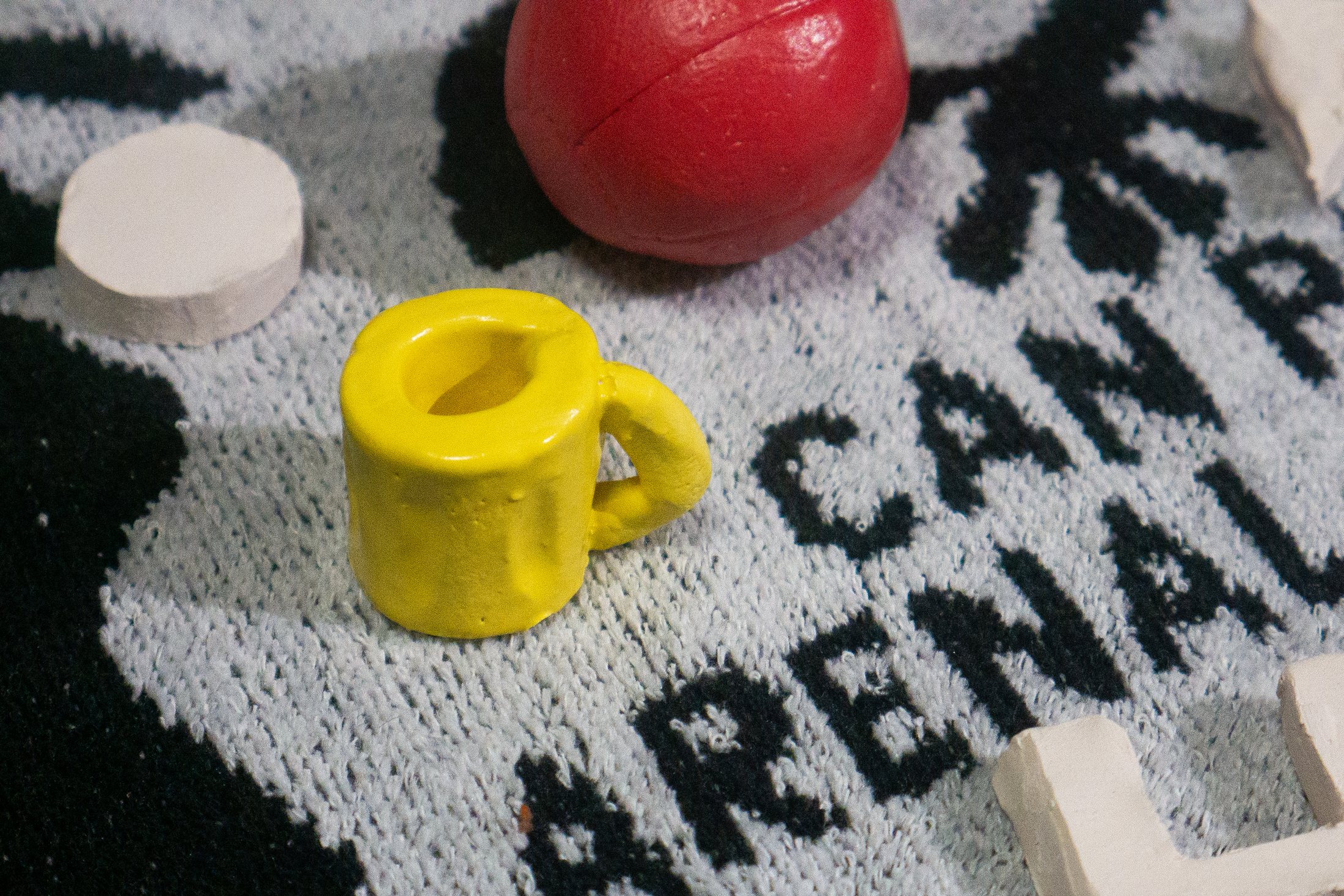
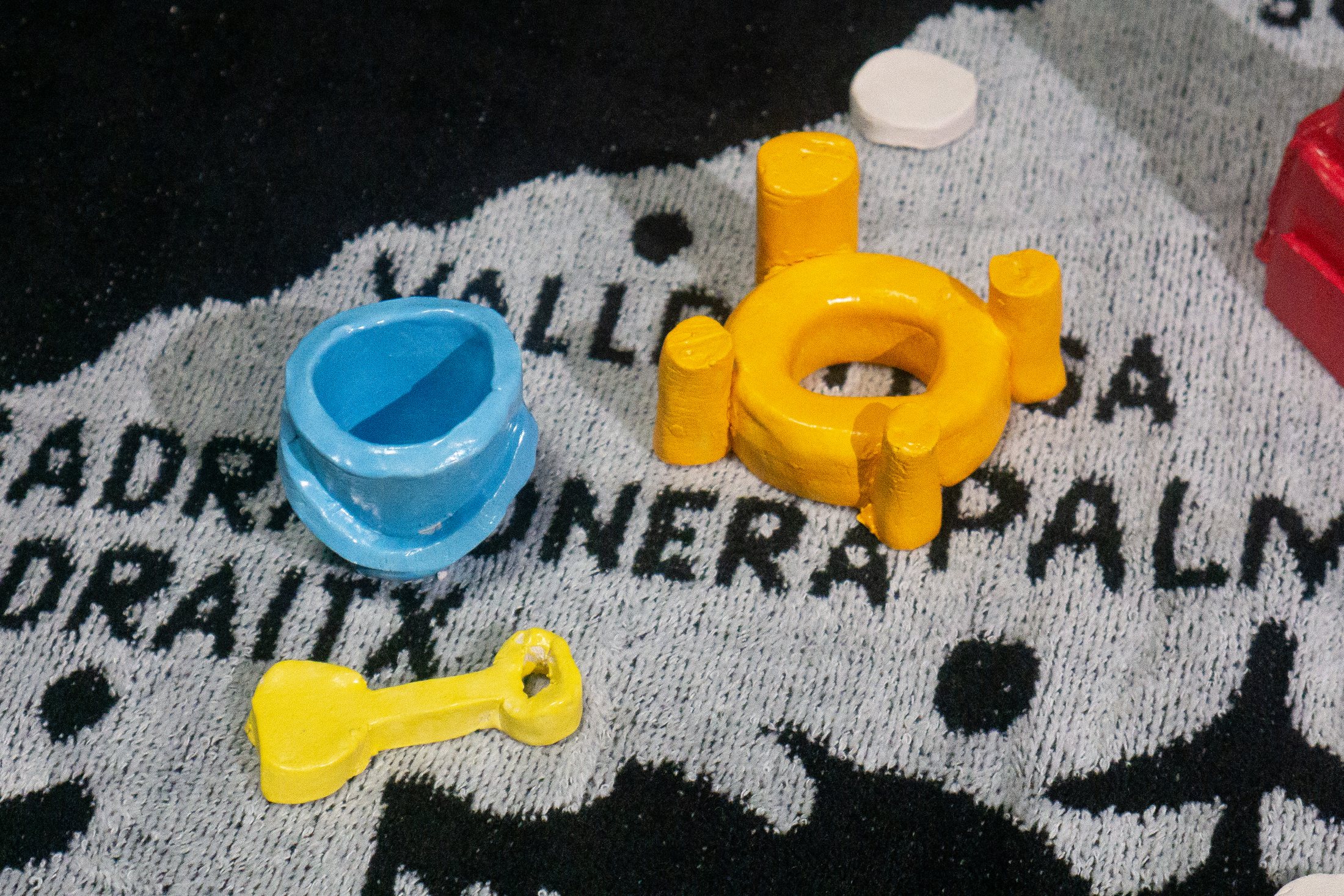
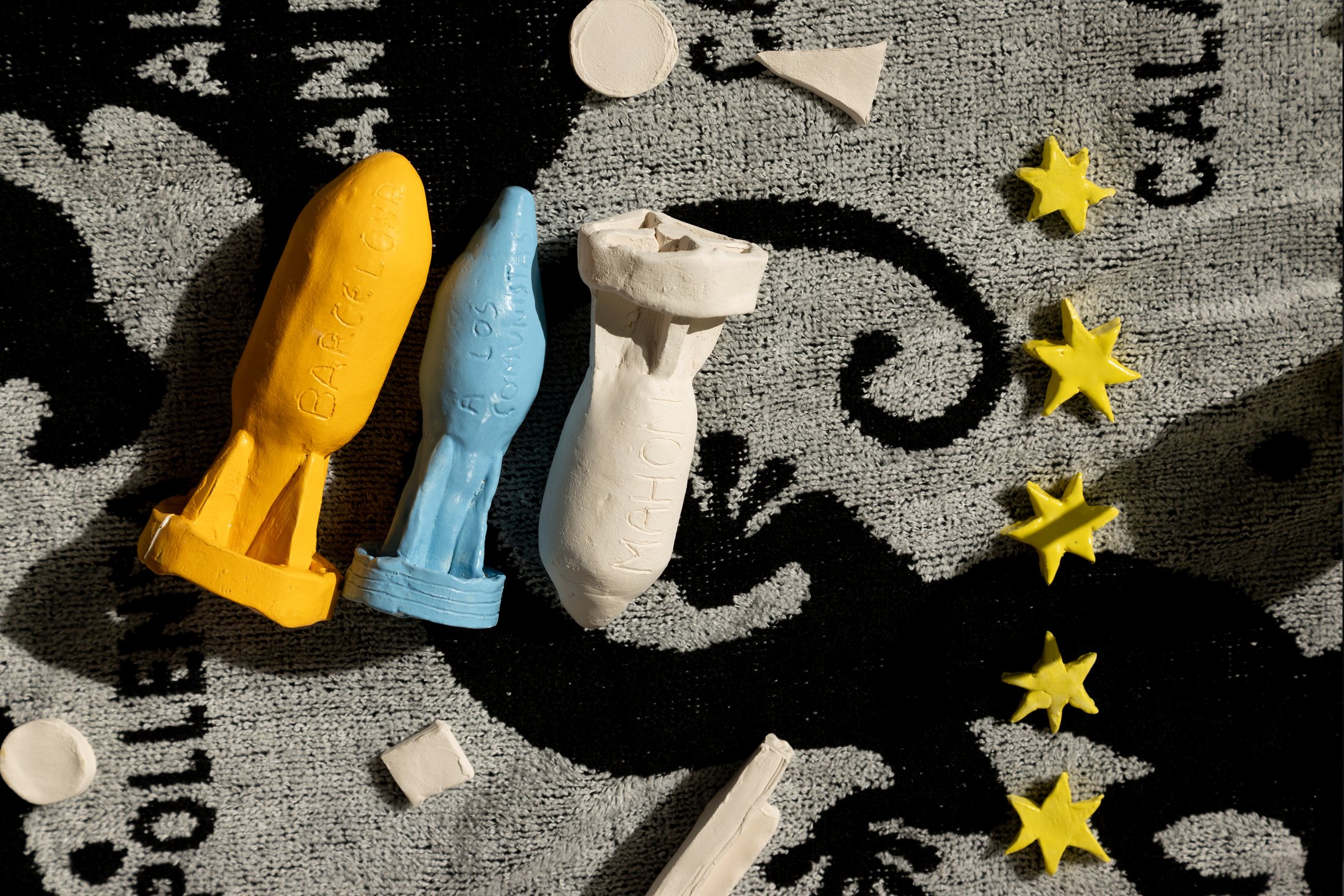
2023 · Beach towel (82 × 165 cm), 55 ceramic pieces
A beach towel like those sold in El Arenal souvenir shops becomes a map of war. With a playful, seemingly harmless aesthetic, it records the history of the geopolitical and economic interests imposed on the archipelago. War and tourism become intertwined, connecting the colonial logics of the historical processes that shaped the Balearic Islands.
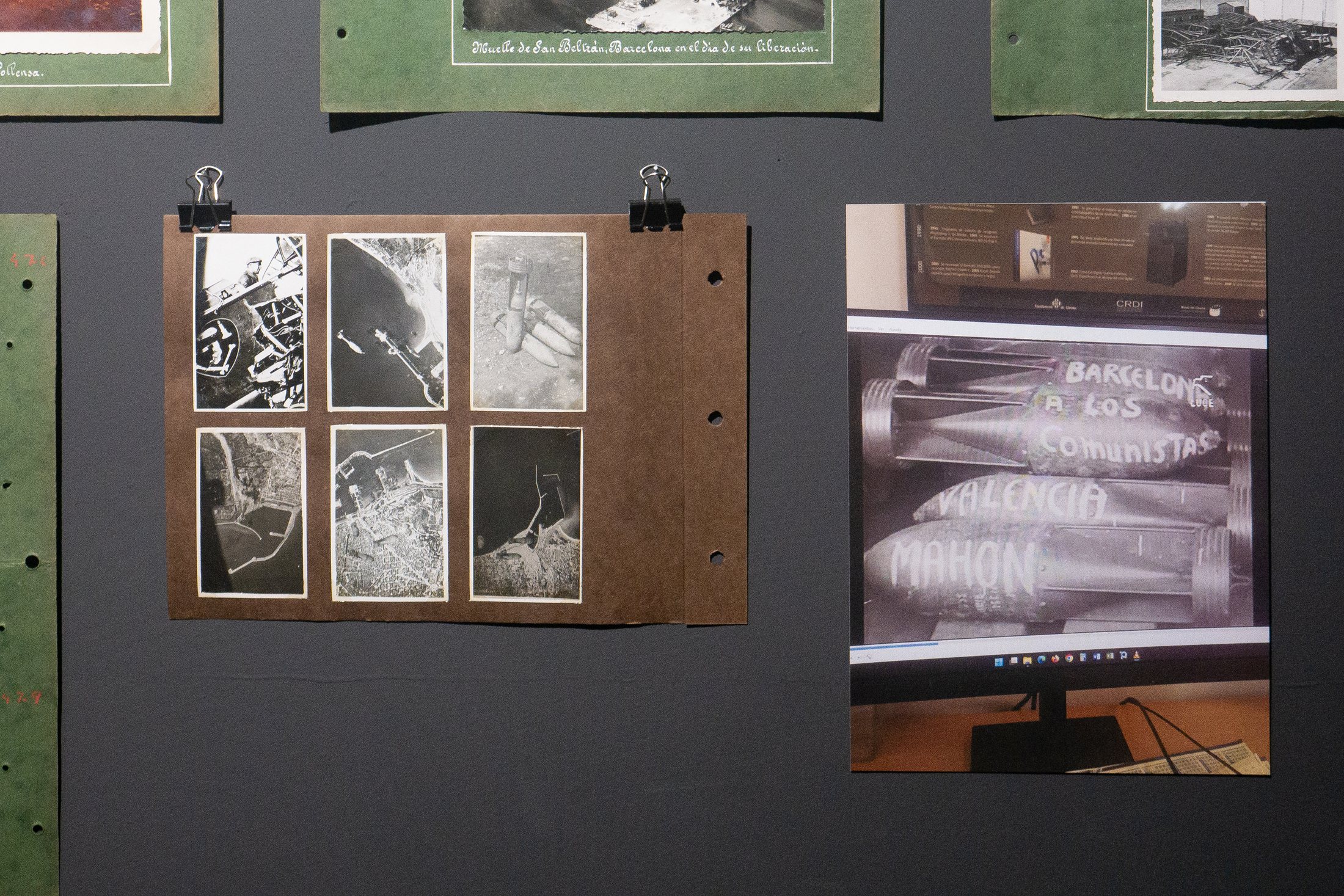
Las mismas bombas cayendo sobre dos ciudades distintas (The same bombs falling on two different cities)
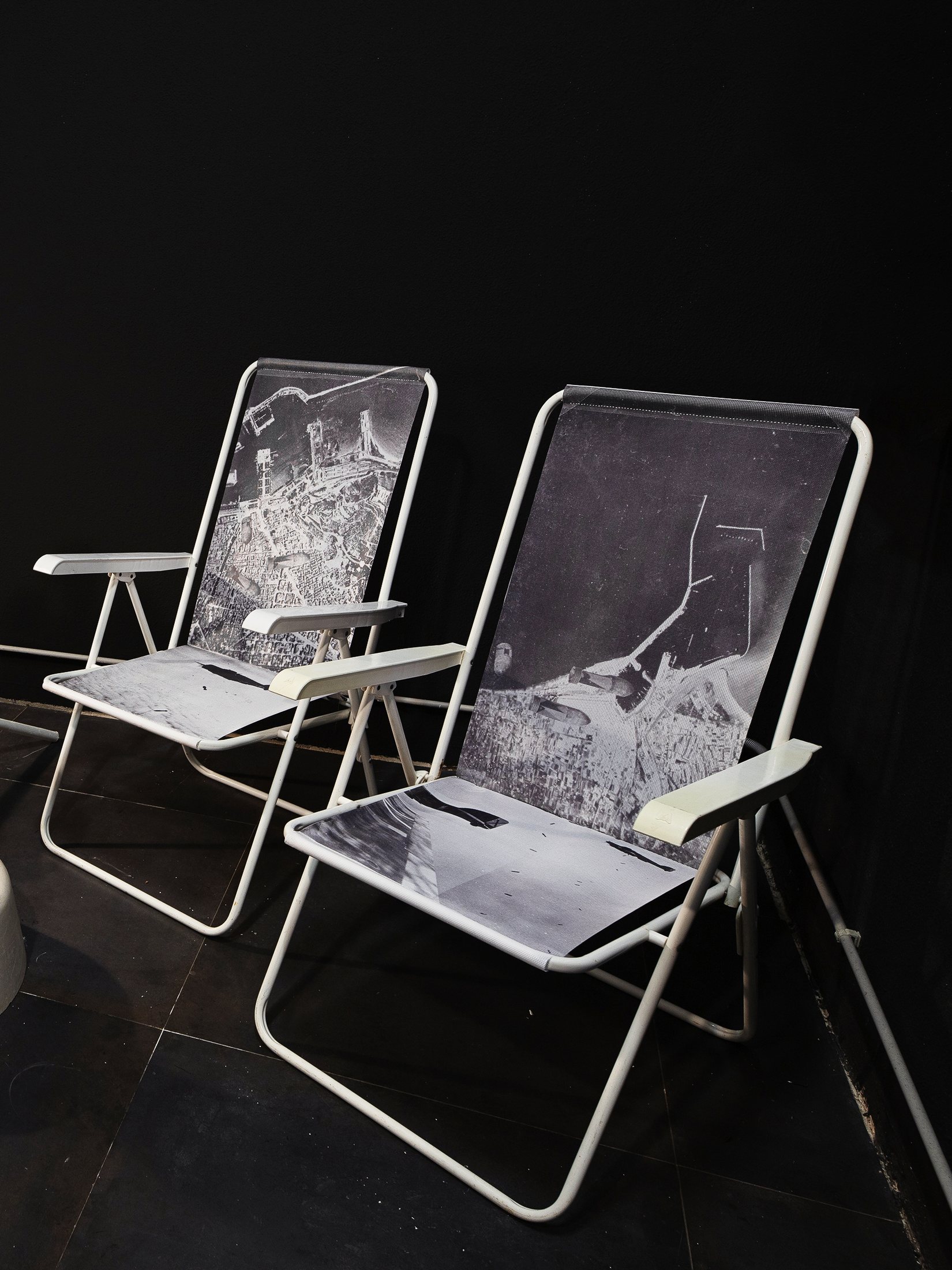
2023 · Beach chairs, print on PVC mesh
Beach chairs display supposedly unpublished images of the bombings of Barcelona and Valencia during the Spanish Civil War, taken from the Italian planes that dropped the bombs. On closer inspection, I discovered they were composites: the three bombs shown falling on the two cities are exactly the same. These propaganda images point to an additional form of cruelty: not only physical destruction, but imaginary destruction too. This violence ultimately underpins the country’s development and tourist economy, creating an era of contrasts in which tourism coexisted with dictatorship.
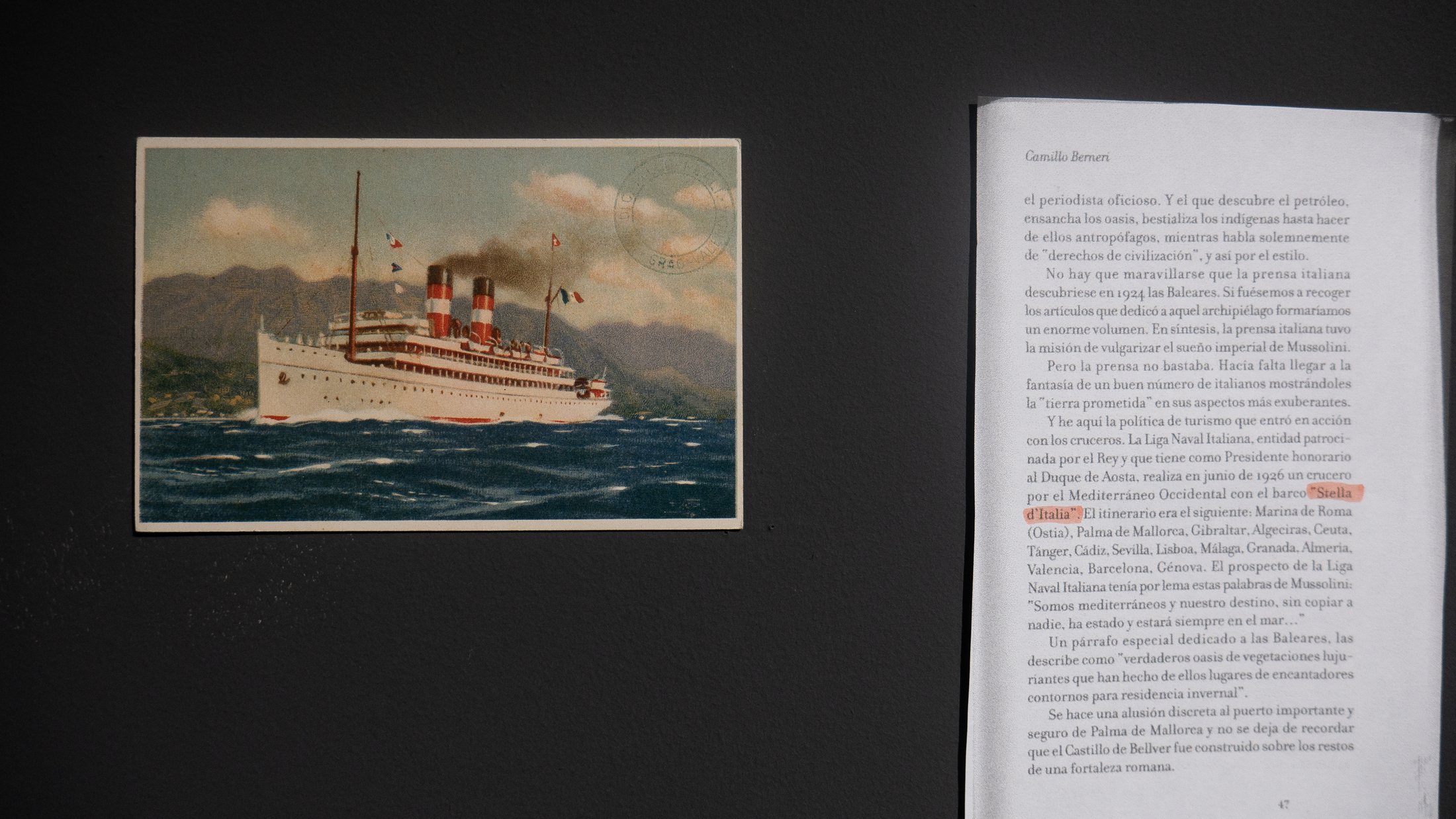
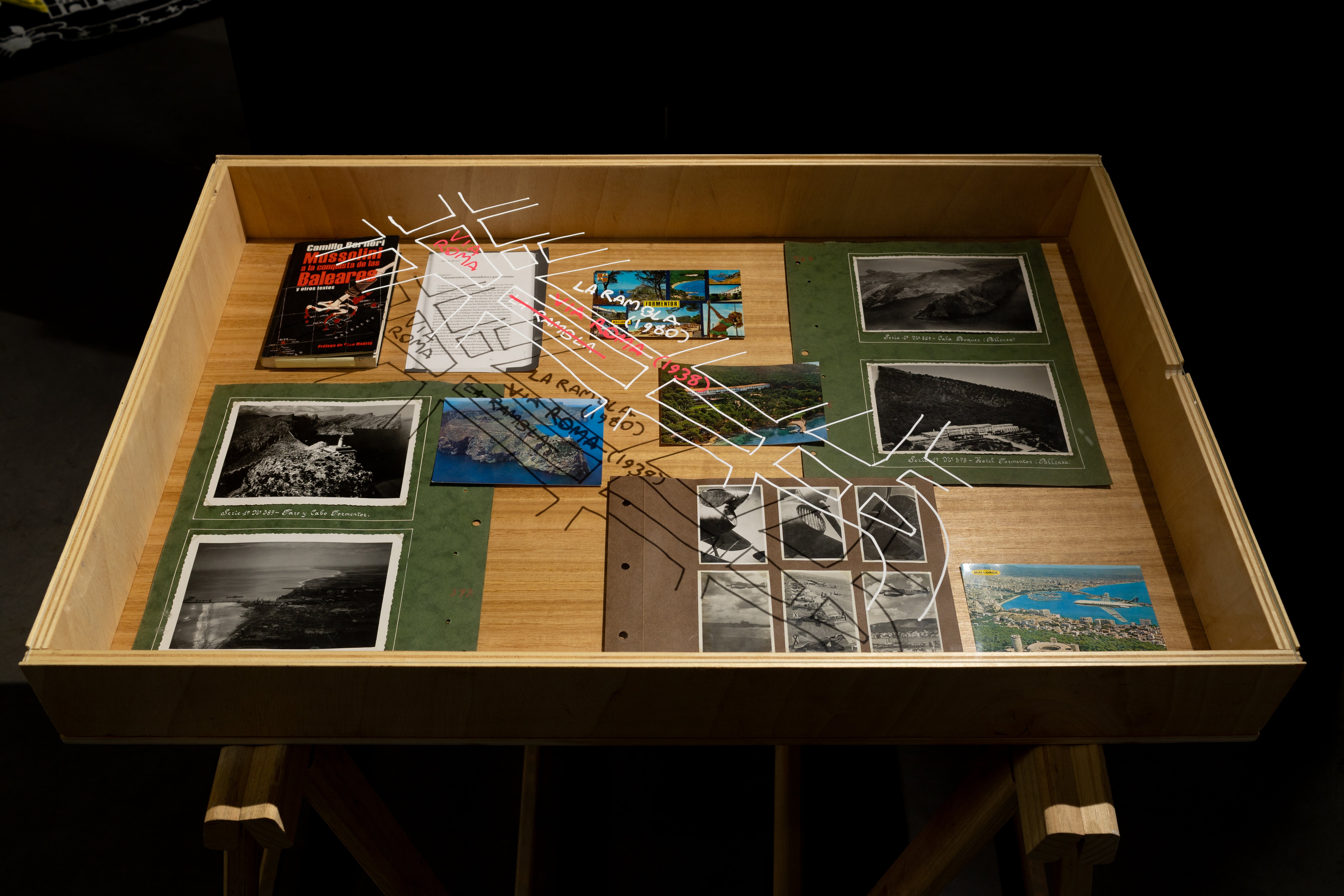
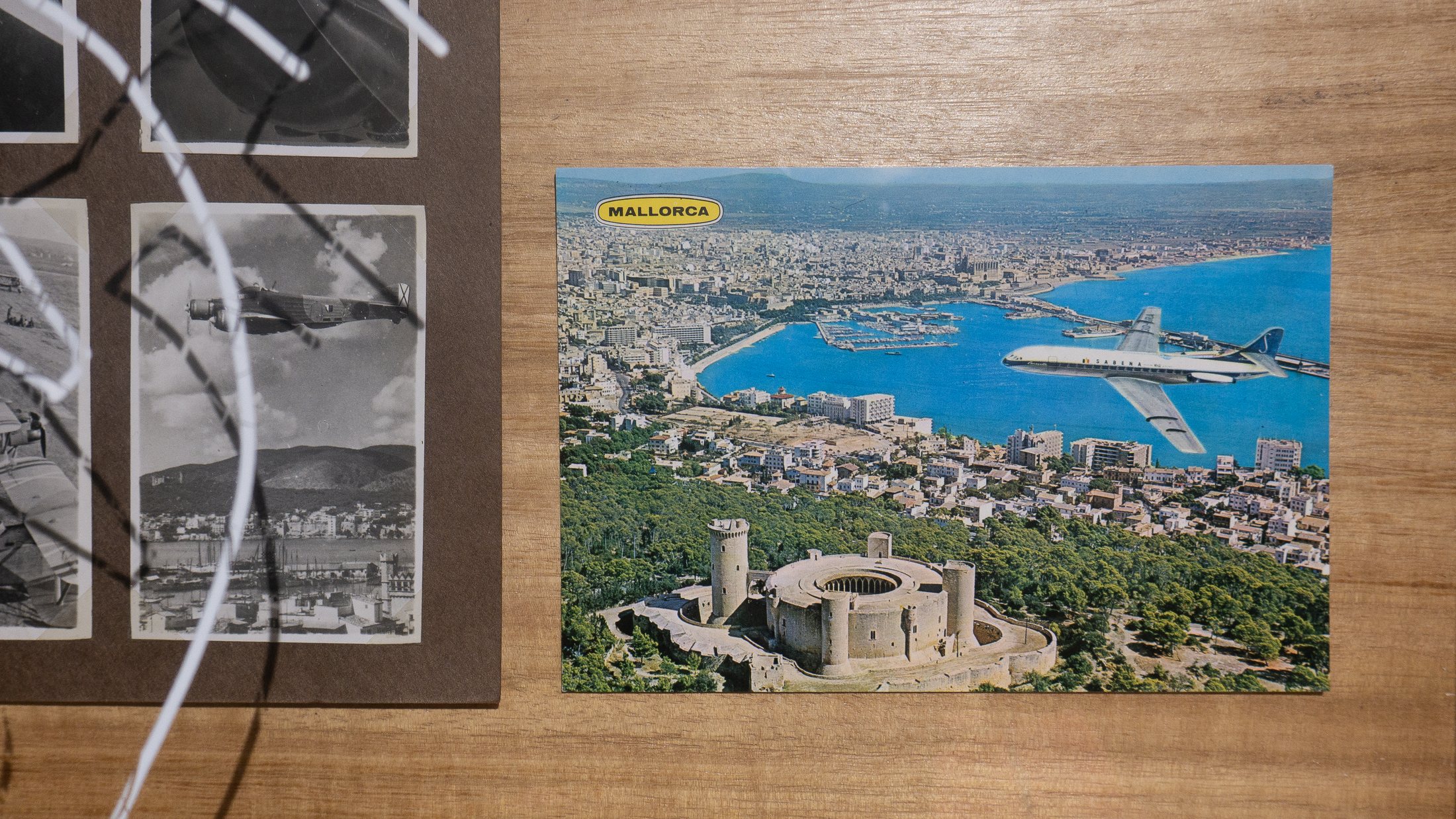
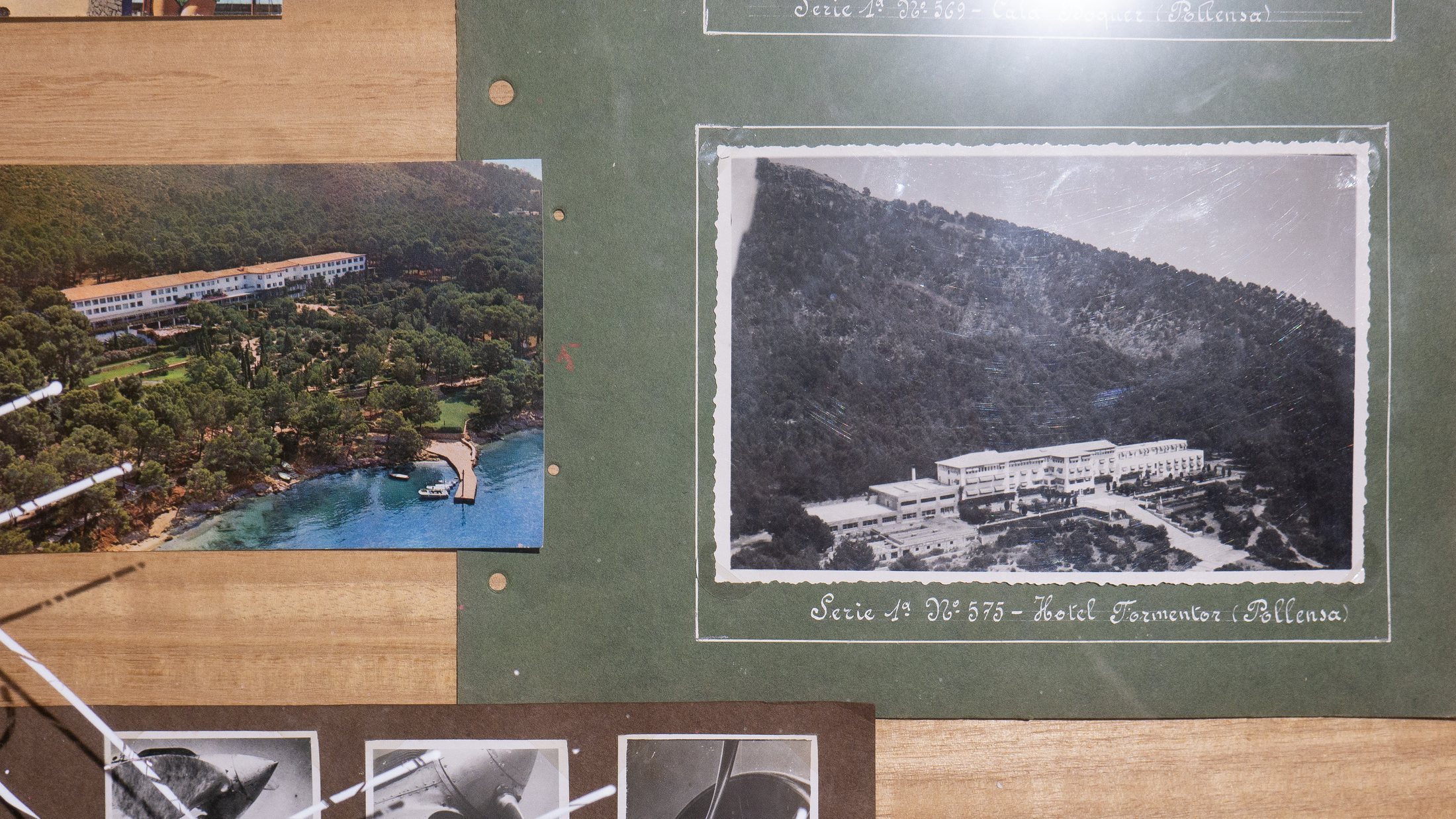
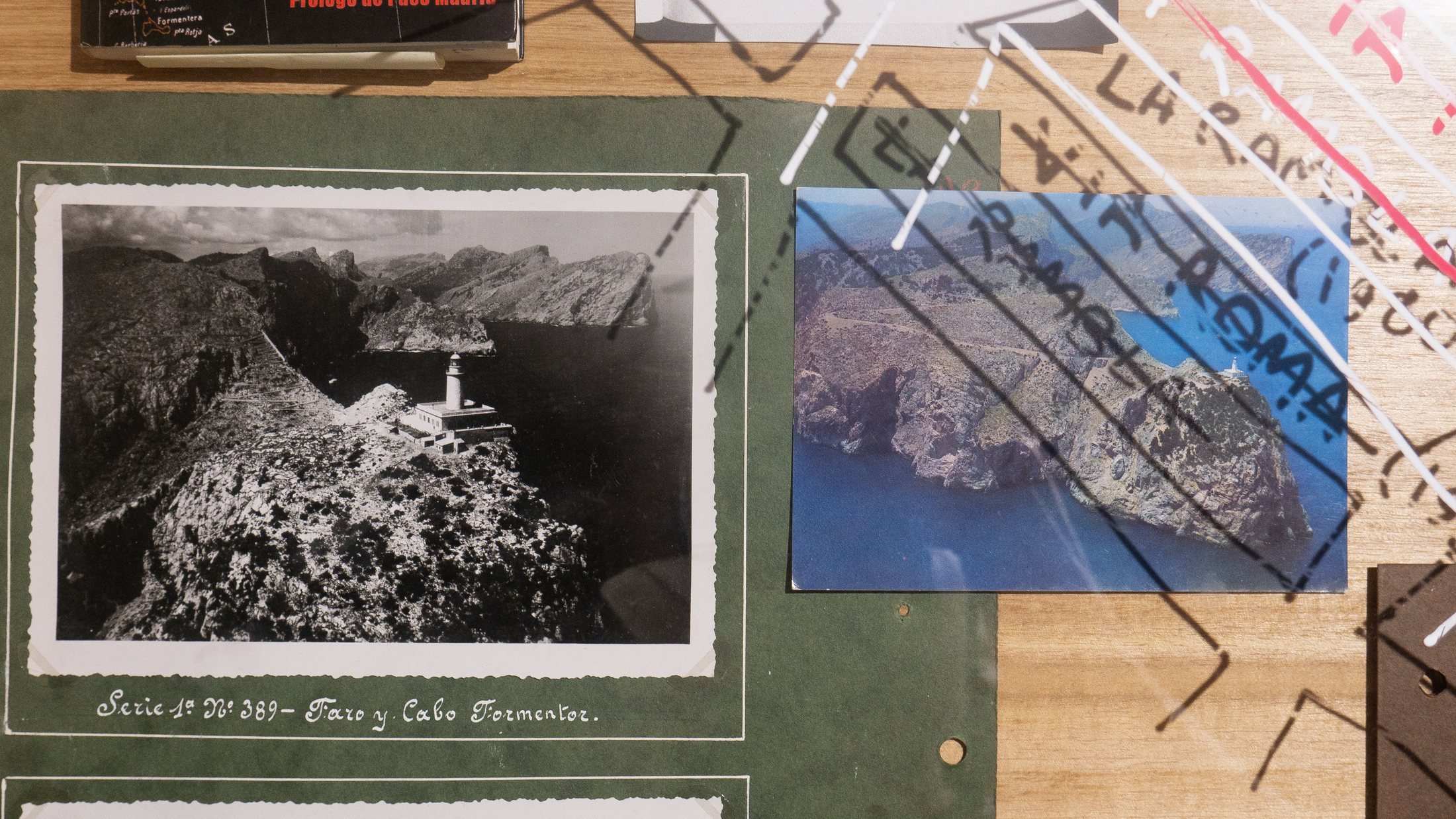
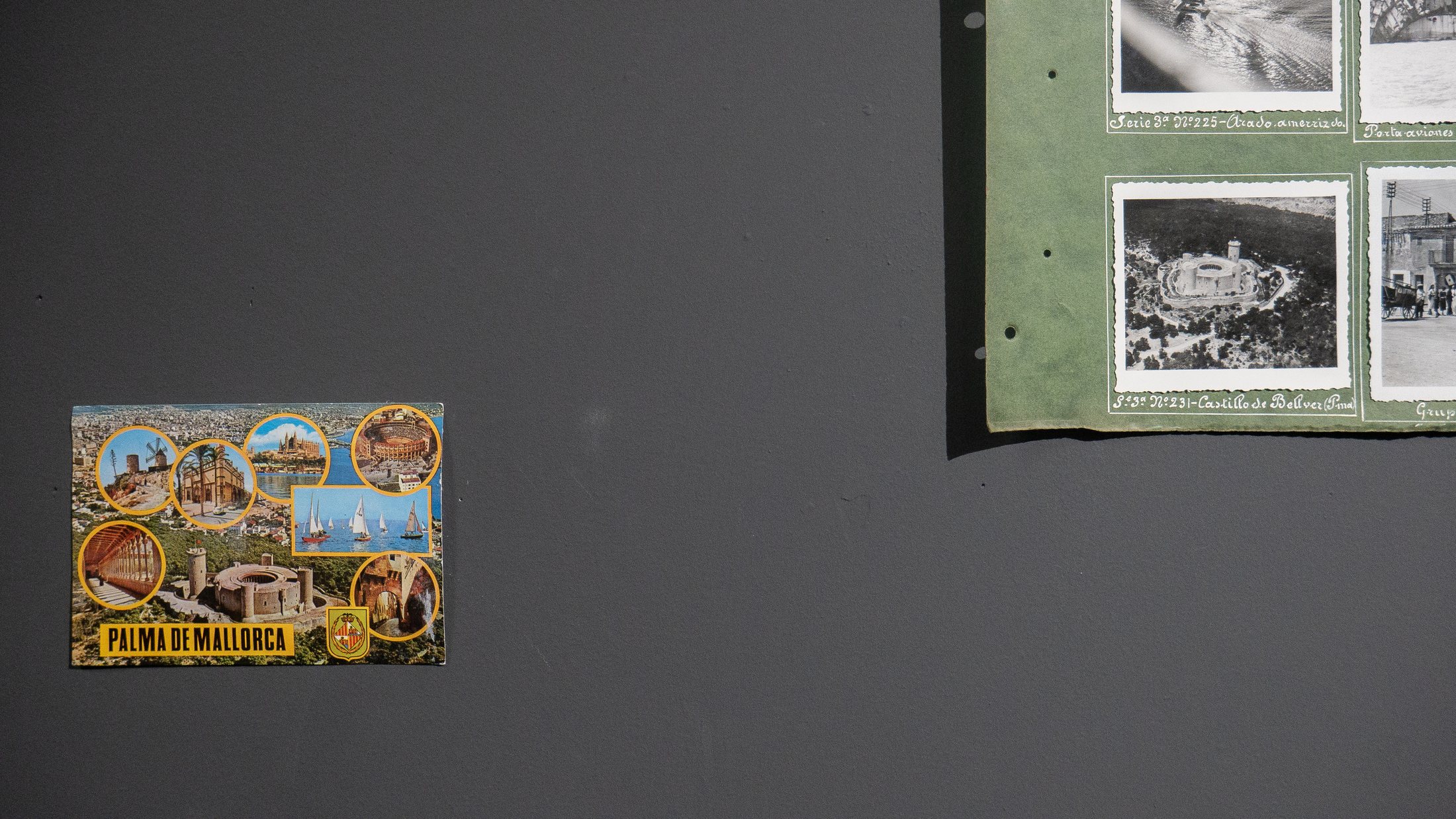
These pairs of images bring together, on the one hand, military photographs from the 1920s and 1930s and, on the other, tourist postcards from the 1960s and 1970s. The military photographs come from an Italian Military Aviation album found in the Planas Archive. Among other things, it shows the Pollença airbase and Italian aircraft, as well as various locations across Mallorca. The framing in these photographs is strikingly similar to that found decades later in aerial postcards of places such as Hotel Formentor, Pollença Bay and Bellver Castle. The superimposition of these two images reveals a shared gaze running through both phenomena: military and tourist colonisation. Berneri’s text, written at the time these photographs were taken, confirms this: according to his research, the Italian fascists’ interest in the archipelago was not merely strategic, but also driven by a romantic gaze that celebrated the beauty of the landscape.